Showing posts with label art criticism. Show all posts

Sunday, September 23, 2012

A List of 600 Aesthetic Idea Files Removed from Visual Art Service and the Artist Studio. As Removed from Large Beige Metal Filing Cabinet with Five Drawers, September 1-3, 2012.


More than just aesthetic ideas removed.
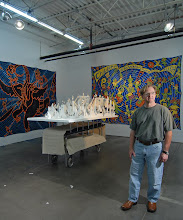
Image from Artist (Un)Placemaking Sale, Casket Arts, Minneapolis, MN, USA. August 2012.
Pete Driessen © 2012 Artist Smart Phone Photo.

A List of 600 Aesthetic Idea Files Removed from Visual Art Service and the Artist Studio.
As Removed from Large Beige Metal Filing Cabinet with Five Drawers, September 1-3, 2012.

Aboriginal Dreamtime
Acrylics/New paints
Advertising
Adjunct Professions Practice
Agates
Airline Tickets
Air Planes
Allegories
AIGA
ASC/Amer. Soc. Cybernetics
Amer. Society Marine Artists
Anarchy/Anarchosyndicalism
CS Anderson
Anderson, Laurie
Animal Rights
Animals
Animation
Anime
Anoerexia/Bulemia/Eating Disorders
Annual Reports
Antiques
Archie McPhee
Architecture
Archeology
Argone
Art Books
Architects/Designers Social Responsibility
Siah Armanjani
Art Basel
Art Basel Miami Beach
Art Chicago
Art Criticism
Art Disability
Art Education
Art/General
Art Health Hazards
Art Lofts
Art Marketing/General
Art of Insane
Art Povera
Art Retreats/Travel
Art Reps/Agents
Art post cards
Art Products
Art Tourism
Artist Catalogs
Art Exhibition Catalogs
Artist Call for Entries
Artist Self Promos/Bios
Art Supplies/Machines/Ect
Arts Midwest
Arty Therapy
Asian Art
Aspen 1988
Ass. Of Prof. Art Advisors
Ass. Of Prof. Design Firms
Assimilation
Astronomy
Atelier Lacke
Auras
Australia
Autopoeisis/Autopeitic Structures
Aboriginal Art
Autographs/Signatures
Bais d.St.Paul Painting Symposium
Banana/Fruit Labels
Ballast Mag.
Bar Passes/Tickets
Barnes Collection
Barn wood
Battalion 316 Death Squad
Charles Beidermann
Balthus
Banff
Bari, Judy
Barthes
Beckmann, Max
Bemis Center
Berlin
Bibliographies
Birds
Biological Warfare
Biology
Blacks/Pigment/Colors/Blk Gesso
Black holes
Black sites
Blackwater
Blues/BV/Teal/BG
Boats/Nautical
Bohm, Dr. David
BookMarks
Stanley Boxer
Boxes
Brain/BrainMind Journal
Brochures/Design
Brooklyn
Browns/Sepias/Sienna
Brueghel Blind leading the Blind/etc
Bush Artist Fellowships
Bush Fnd. General
Bush leadership 2005
Business Partnerships
Butts/Nice Asses
Byrne, David
CAA
Cabins
Cabinets
Calendars
Calligraphy
Call for Entries
Camargo
Julia Cameron
Cancer
Capra, Fritjof
Cars
Careers in Art
Carpet
Cartoons/Ideas
Cats & Pussies
Catalogs
Catalogs/Ideas (2)
Censorship
Census 90
Center for Arts Criticism
CFVT-Center for Victims of Torture
Ceramics
Chagall, Marc
Chank
Chaos
Charts/Graphs
Che Guevara
Cheney Fat Dickie
Chi
Children’s Art
Chocolate
Chomsky/Linguistics/Media Model
Chop Sticks
Christies
Christmas Cards
CIA/CIA Torture/CIA Black sites
Clip Art
Club Scene
Coffee Cups/Tea cups
Cognition
Coins
CST-Lecture Series
Colleges/Art Programs
CVA
Color Theory
Color Palettes/Charts
Color Design/Form
Coloring Books
Columbia
Columns
Comics
Communication
Computer Graphics
Content
Squeak Cornwrath U/MN Talk
Corporate Art
Corporate Responsibility
Cows
Counter Terrorism on US citizens
Courbet
Crafts/Amer. Craft Council
Creative Capital
Creative Cycle
Critical Art Ensemble
Culligan Illustration
Curating
Dalai Llama
Deadalus Fnd.
Deleuze/Anti Oedipus
Depression/Anxiety
Design History
Design Methods-J.Christ. Jones
Designer Books
Design Camp 1989
Designers Saturday
Desktop Publishing
Digital Imagining
Digital cameras/photography
Dime Novels
Dinner Ware/China Design
Direct Mailers
Disinformation
Distribution Systems
Dolls
Dreams/Dreaming
Drones
Duffy Group
Dutch
Earthwatch
Easter
East Timor Massacre
Eavesdropping
EBay Sell Seminar
El mosote massacre
Egyptian/AncientArcheologyImgs
Embossing
Émigré
Ending Relationships
Envision 91
Envelopes
Euphemisms
Faces
Escher, MC
Exhibition systems
Expositions
Fabric Design
Facilities Brochures
FAIR/Extra
Fair Trade
False Flag Ops.
Fashion /Clothes/Tags
Fashion Design/Catalogs
Fauves
Figure
Figure/Ground
Film/Movies/Noir
Fine Art
Fire
Fire Engines
Fischli/Weiss
Fish Houses
Dolly Fitermann Gallery
Flags
FATE
Feminine thinking
Flowers
Fluxus
Folding + Origami
Food
Forecast
Forms Design
Foucault
Frames/Framers/Framing
Freelance
Fresco/Mark Balma sucks
Frida
Fruit
Furniture/Chairs/Design
Gallery Portfolios
Gargoyles
Gambling
General Mills Corp. Art Collection
Genital Mutilation
Genocide
Gericault
Gesture/Line Drawing
Getty
Glass/Mirror Design
Golub, Leon
Gradations
Grants/Money
Graphic Artist Guild
Graphic Design
Graphis Mag.
Grapus Group
Greens/BG/YG
Green Party/Nader/LaDuke
Globalism/Curating       
Globalism/Walker
Gold
Golden Fnd
Gonzalez-Torres, Felix
Goya
Greenshields, Elizabeth Fnd.
Grey, Carol-Hands
Grof, Stan
Group Material
Guantanamo/GITMO
Guattari
Guernica
Guggenheim
Guns
Hair
Heliogram
Helms, Jessie
Heraldry
Hockney, D.
Holes
Holography
Holy Hill, Wi/Saints/Rosary
Hughes, Robert/American Visions
Human Rights
Human rights Violations
Humming Birds
Icons
Iconograda 91
Ideas
Ideas to create/Paint
Illustration
Impressionism
Indians/Native Americans
Indigo
Infinity
Insurance of Art
Interior Design
Interrogation
IDC NYC
IDCA-86
IDCA-89
Intl. Market Square
Invitations
Intermedia
Internet/Artists/Web
Iraq GENOCIDE of 2 mil. Kids
Iridescence
Japan Design Contest
Jewelry
Job Hunt Articles
Jokes
Ronald Jones Lecture/UMN/4/25/96
Junk Mail
Allan Kapprow
Knives
KUBark Manual
Lakes
Landscaping
Latin American Working Group
Law/BusWorkshp/Copy/TaxesSm.Bus.
Lawler
Learning Strategies
Lies/Lying/Deceit/Deception
Lighting/Lamps/Lanterns
Limited Edition Art
Maya Lin
Lindbergh Grant
Lingerie
Linguistics
Local Products/Services
Logos/Letterheads
Love
LES/Lower East Side
Luggage
Lunch boxes
Magazine/Publication Design
Mailing Lists
Mall of America
MMPI
Mandalas
Manhood
Maps
Maria Walsh Sharpe
Chris Mars
Marbles
Marble/Tile/Texture/Granit/Surface
Masturbation
Mayo Collection
T. McEvilley Lecture UMN 4/18/96
McKnight-Cost of Culture
Malcom McLaren
Mead, Stu
Memphis Design
Menus
Metallic Colors
Metropolis
Midcentury
Military
Mipls. Inst. Arts
MCAd-Jerome
Mcad-McKnight
MAEP
Minnesota-General
Min.Center Arts Ed/Perpich
Min. Museum of Art
Min. Soc. Architects
MSAB
Modern painters
Monet.
Morphogenetic Fields
Mosaics
Molding/Millwork
Murakami (Painter)
Murals
Muse
Museums-Various
Music
Mutations
Ralph Nader
Napkins
Navy/Naval ships/submarines/seamen
Nautical Ideas
Nauticalia Tentaculus
Neu Shaklikeit
New Museum
Alexandra Nichita
NAEA (North Amer. Art Ed. Ass)
ND-II
NEA
Noah’s Arc
Todd Norsten
NY Mills
NYC art galleries/etc.
Nylons
Manuel Ocampo
OJ
On the Edge Conference 90
Ongoing
Open U-Get Grants
Orange Color/RO/YO
Organization/Procrastination
Oscillation/wind
Brian Otto
Package Design
PDC/package Design Council
Paint by Numbers
Painting Ideas
Painting-General
Palestine Genocide
Palm Pilot Art
Paper Samples/Ideas
Paper Sculpture
Paradox
Patriarchy/Patriarchical Systems
Peace Museum
Peach Skin Tones/Colors
Agnes Pelton
Penis/Phallus
Pens
People for the American Way
Perkinji Shift
Photo Reading
Photography Ideas
Plants
Pinwheel-Conversions
Political Art
Politics-Curriculum
Pollock-Jackson
Pollock Krasner Fnd.
POP cult.
Pop ups
Portal of Kama/Kama Cleft/Taint
Portfolio Cases/
Posters
Powell, Gen. Colin  Fake Speech
Poussin
Power/Powerlessness
Pribrahm, Dr. Karl
Prigogine
Printing Industry
Prints
Prints-Giclee
Prints-Mono
Propaganda
Public Art
Psychic Fair
Psychology
Psych Ops. In Guerilla Warfare
PR
Propaganda
Quality
Paul Rand
Radical
Radical Art Caucasus
Rainbows
David Rathman
Realism
Red/Cad Red Light/RV
Religious Art
Residencies
RCA-Arts Administ. Seminar
RCA-Slides for Grants
Resume Examples
Retabalos
Right Wing Bastards
Riverboats
Rhythm/Modulation
Robots
Rochester Art Center
Rome Prize
Romero, Archbishop Assassination
Rothschild FND.
Rove, Karl Butcher
Rubber Stamps
Rumsfeld Shaking Sadams Hand
Rwanda Genocide
SM/Sado Masochism/Bondage
Sails/Sail cloths/sail shapes
San Diego
Irving Sandler Artists File
Julian Schnabel
SOA-School of Americas/Tortur/Fr.Roy
Charles Schultz
Sculpture
Seattle, Chief--Web
SEED Sampler
Self-Organization
Self-Promo
Semiotics
Serrano, Andre
Sex-1
Sex-2
Sex-3
Shamanism
Sheldrake, Rupert—Morpho Fields
Shells
Ships
Ship of Fools
Shoes/High Heels
Shopping Bags
The Show 1989
The Show 1990
Simple Life
Small Business Start Up
Snakes
Snowy Paper Weights
Social Responsibility
STA (Society of Type Designers)
Soldiers/Soldier Images
Specialty Advertising
Split Rock
Stained Glass
Stamps/Philately/First Day Issues
Star Trek
Steensland Art Mus/St. Olaf
Strapons/dildos
Sticker/Mailing Labels
Still Life
Stock photo
Studebakers/Avanti/Ray Loewy
Subrosa/Faith Wilding
Sunglasses
Super string Theory
Surrealism
Symbolism
Symmetry
Synchronicity/Coincidence/Anomoly
T-Shirts
Tapai Int. Design Exhibition
Tapestries/Rugs/Carpets
Tattoos
Tennis
Text/Image/Art
Textiles/Marble/Fabric/Granit/Tile/Etc
Theatre
Thermography
Tibet
Tickets/Stubs
Time
Tiravanija, Rirkrit
Tornados
Transformation/Transcendence
Travel-General
To do
To file
Toronto
Torture/SOA
Torture Manuals
Toys
Trains
Tubas
Typography Ideas
UCDA
UN Declaration Human Rights
UMN Percent Arts-reject
Upper Lower Case
Uptown Art Fair-1992
Uranium, Depleted Weapons
Van Gogh
Van Gogh's Ear
Varella, Francisco
Verne, Jules
Vets for Peace
Victimization
Violet/Purples
Virgin (Mary) of Guadalupe
Janet Virnig Art Rep
Vision/Eyes/Neuro
Visual culture/Visual Studies
Vortex
WAMM
Walker
Walker Library Prop.
Lila Wallace
Warhol Fucked every musesum
War
Watches
Water
Waves/Inference Patterns
Weather Stuff/Storms
Weisman Art Talks
Wexner Center for the Arts
WPA
White Color/Pigment/Gessos
Whitney Biennial
Whitney Mus Independent Study Prog
Wildlife Art/Duck Art
Wilensky Arts
Windows
Wine labels
Karl Wirsum (artist)
Women’s Images
Wrapping Paper
Writing/Wisdom
Wyeth, Andrew
Yellow/Yellow Ochre/Pea
Yoga/Buddhism
Zines
Zinn, Howard
Zoos/Zoology

Pete Driessen/Visual Artist © 2012    
 Signed in Black Sharpee Marker on Bright Pink Paper/Limited Ed. of 100.


xoxox, pd


Thursday, July 28, 2011

The Transformative Misfit Gilligan

Mississippi Megalops Artist Statement


“If it not for the courage of the fearless crew, the Megalops would be Lost…the Megalops would be Lost…the Megalops would be Lost.”

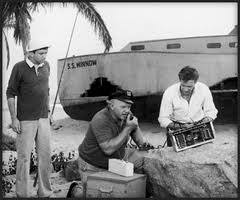
Throughout the infamous Gilligan’s Island television series of the 60’s and similar to artists in the art world, the misfit character Gilligan, played by Bob Denver, often suffers from harsh critical rejection and abusive judgment in multiple forms. Despite Gilligan’s genuine creative efforts, he often succumbs to public scrutiny, private and collective judgment and verbal ridicule in front of the S.S. Minnow crew members with someone finally uttering the critical shunning line, “Oh Gilligan, you’ve done it again!” This exclusionary and repetitive “done it again” refrain, created and produced by the late Sherwood Schwartz, and running for four seasons, placed Gilligan’s Island on the mediated forefront of the American visual culture scene.


How many times have viewers witnessed the ostracizing Skipper roll his eyes and do a double take at the first mate, and sadomasochistically whip his captains hat on Gilligan’s head? The naïve Gilligan waif takes the abuse with a grain of salt, shrugs it off, and simply turns the other cheek, meanwhile staying the course in his artistic naval “duty” and asking for more. Parallel to snobbish art critics, selective curators, pompous collectors, and/or sharkish gallerists, the varied response of the snooty Castaways allows Gilligan to either move up or move down the artistic gate keeping totem pole with acceptance or denial of entry. This traditional, conservative “either/or” positioning of the collective gatekeepers/Castaways blocks both Gilligan and the Castaways from their potential artistic rescue. If the critical Castaways moved to an “and/or” acceptance positioning, they would then self realize the present moment and find the folk artist Gilligan and his creative talents of high worth. The Castaways lack of an “and/or” acceptance position physically and emotionally blocks their return to civilization.


The semi-blind Castaways, akin to often closeted critics, curators, collectors and/or gallery owners are unaware of the creative talent so close in their midst. Gilligan is the quintessential artistic and creative fuck up! To the anonymous tourist and island passerby, Gilligan is nothing more than a low valued, uncreative servant and untalented Dock Boy. Yet, like Edison and Einstein, each creative and inventive failure leads Gilligan to the next inventive and resourceful artistic success. Every episode of Gilligan’s Island is artistically staged as a continuous chance at and creative choice for both individual and collective survival. With the most goofy, kooky and ingenious ways, Gilligan primarily helps, hinders and finally halts the possible Castaways rescue. Whether in the hut, on the beach, near the lagoon, or up the coconut tree, Gilligan is the shape shifting creative portal to the future potential rescue of the cast.


As the first mate and creative misfit, Gilligan sits on the lonely bow, in the cockpit, and at the stern of the possible vessel to the Castaways liberation. To a certain degree, Gilligan the artist represents a positive, survivalist figure escaping the pressures of daily life thru his canvas and mediums. Think Gauguin, think Doig. The island, jungle, beach, wind, water, waves, storms and ocean all develop into a grand blank canvas for the artist Gilligan to mold, shape and form in any creative manner he sees fit. The islands natural biological habitat and geographic canvas become an aesthetic stage for the creative misfit to visually explore, discover, investigate and diagnose.


Comparable to the painter in a flow state at one with their canvas, Gilligan loves to be in nature and at one with the island/jungle/ocean. The more he is in harmony with natural canvas, the further his past and present becomes a mere temporary memory magnified via the transformative creative process itself. His consummate artistic duties are to be a creative producer, to be creatively prepared for anything--whether real or imagined, and also to be an artistic collaborator sharing his eccentric creative talents with the others so that he and the others can be transported, released and/or escape the torment of the island. There is a cute scoutishness to artistic Gilligan, unconditionally helping the others, inventing innocent learning projects, adding new artistic badges to his portfolio, and always being resourcefully prepared. Gilligan’s creativity must be ready to deploy at any moment—as the successful creative escape to the grand curatorial and museological mainland, led and fostered primarily by him for the sake of the others, can happen when the Castaways least expect it.


With a sensitive fairness doctrine, Gilligan, the former President of the Eighth Grade Camera Club, impartially deploys his creativity equally amongst his fellow Castaways. Each individual Gilligan’s Island character needs Gilligan in a slightly different manner, uses and abuses him to their satisfaction, and symbolizes several simultaneous individual and collective social codes, norms and/or tropes. The Skipper represents power, control and authority; the Professor reflects knowledge, information and wisdom; the Howells illuminate capitalism, excess, marriage and naïve trophy housewife; Ginger symbolizes the sexual seductress, deceptive beauty, and fertility; and direct from the Winfield General Store, the coconut cream pie herself, Mary Ann, signifies the organic seed, wholesomeness and domesticity.


Gilligan himself dresses in red Jersey shirt, white bucket hat, bell-bottomed light blue denim pants and seafaring attire reflecting a genuine do-gooder paperboy patriot. (1) Though anti-Vietnam sentiment prevailed at the time, the character Gilligan represents a special anti war, Hollywoodish commentary on the “helpful American.” Like the boys in Nam, he drops by, he messes up the place, and he leaves. Gilligan’s role is often helpful and thoughtful at first, then rejected by those in need when all hell breaks loose. But unlike a Republican bulldozer-of-a-government that thinks might-makes-right no matter what collateral damage occurs, Gilligan is able to quickly reframe, take the high road, apologize and makes amends on the spot. The artist misfit apology system thrives under his powerful critical rejecters/Castaways, by reworking, rebuilding and recombining past artistic goofahs into “ah-ha” moments and creative learning experiences that eventually lead to artistic survival/success.


Gilligan the creative must often choose between the multiple islander codes and symbols—which in turn puts him at duplicit odds with the other Castaways. The collective and individual creative conflict that ensues often confuses Gilligan in the final choices that he is forced to generate. Like the artist at odds with society, Gilligan must choose to create from his soul, heart and mind in order to be at one with both his internal artistic needs, and yet externally set himself both apart from the community, and conversely partner with this community at the same time. Will it be Ginger or Mary Ann?, the Skipper or Professor?, Thurston or Lovie?, the stranded Japanese sailor, the Jungle Boy, or the ape in the cave? Creative participation and artistic choice is often at extreme odds with traditional museological strategies, institutional and academic gate keeping, sanitized curatorial perfectionism, Meeseian community aesthetic norms, and watered-down social artistic codes.


The Castaways continuously project on to Gilligan numerous shape shifting roles: lost son, brother never had, slave/worker, technical assistant, sex symbol, boyfriend, and hero. It is through the psychological projection by the various Castaways own social needs and mental pain that Gilligan is lifted to another creative level. Despite their often disregard, disrespect, and disassociation for him, the others are codependent with Gilligan and in severe need of him to achieve and relinquish their own painful survival quest. Similarly, the codependent curator needs the lost artist and his/her art objects to fulfill the exhibitionary pursuits, museological expeditions, and institutionalized careers. In this regard—by creatively helping the Castaways/gatekeepers, Gilligan sets both himself and the others free. Gilligan is potential savior, liberator, and redeemer, and at the same time acting as rebel, jailer, oddball, and nonconformist. The honest Gilligan folk artist lives in a creator-savior/survivor-destroyer paradox.


The artist savior/survivor paradox plays out on the insular island habitat and archipelago environment as a grand, closeted artist studio ecosystem. The island studio converts into a psychological jail and temporary purgatory—where the Castaways must perform assorted Hollywood skits and novel duties in order to be released from the island asylum. The creative misfit Gilligan holds multiple keys to the jail/studio door. He can let the monkeys in or out of their cage. He can mix, pour, distribute and spill the coconut drinks. He lights the beach bonfire to freedom or douses it with beach sand and ocean water. He designs, builds and sabotages the bamboo life raft. The other Castaways/curatorial characters must paradoxically both love and hate the artistic misfit at the same time. With their museological acceptance of him as creative savior, the fellow Castaways are released of their pain and abandon their fear of the past, present island danger, and potential rescue.


The life that the Castaways are creating on the island is not a bad one. They are continuously challenged in the now and accepting the present moment—but they are also forever living in the duality of past and future—wanting and longing dearly to return the safety/freedom/future of the mainland civilization. The so-called civil mainland represents a dreamlike, Westernized artistic vantage point—with its Ozian capitalism, false perfectionism, and monarchial rules of art law and creative order. Yet, the Castaways are creating a community and collective that functions very well—even within a purgatorial paradise--why would they want to leave the Kansastic island? Individually and collectively the Castaways have a problem of letting go of the potential rescue because they bring to the island so much physical, emotional, and psychological baggage. Similar to the unsurrendered Dorothy, their stressors of everyday mainland life are brought with them on the S.S. Minnow via the turbulent ocean storm to the paradise—personal, political and social problems, items and things they can do without—but addictively long for in order to fulfill their codependency.


The Castaways/gatekeepers are socially, mentally, and physically trapped by their collective and individual past. Why would anyone bring trunks of clothing, furniture, and unnecessary bling on a short ‘three hour tour?” The excursion/three hour tour is a brief revelatory and representative glimpse into our own biology, longer life and livelihood. We humans bring “stuff” along with us where ever we go. And wherever we go—there we are: naked with our baggage. On the canvas of Gilligan’s Island, some of the baggage bubbles to the surface and washes up on shore, some is swept downstream, some sets adrift out to sea, some sinks in the quick-sand mud bath, and some floats to find the safety of the lagoon or mainland safe harbor.

Analogously, art historians, gallerists, curators, and critics all follow art historical, curatorial and museological behavior baggage systems that have been socially and professionally formed over a relatively short period of time (the last 2000 years), and that have created, circulated and disseminated our present day visual presentation systems into the collective social fabric. These visual presentation systems have been structured for and with certain types of individual and collective professional behaviors that follow social, art historical, curatorial, and museological norms and codes, and they project and distribute their past art historical, curatorial and museological baggage, behaviors, and codes onto the next crop of aesthetic gatekeepers, academic art instructors, art historians and critics, visual culture producers and artistic clientele.


It is the First Mates job (albeit an extremely difficult one) to explore, diagnosis, and reframe this Castaway baggage for a positive aesthetic use in the creative journey for artistic rescue. Parallel to the common artist—this job is the never ending creative journey to produce, to be seen, to be chosen and to be included in that next great popular exhibition—the Whitney, the Venice B, the Documenta. The Castaways potential rescue equals that penultimate career point—the satisfaction of fame and success by the jury of your artistic, critical, and curatorial peers. For 99.9 percent of artists that rescue, whether temporary or sustained on the cover of Artforum, will never come. Conversely, that which washes ashore brings forth the new adventure, and sparks the creative impetus for the next chance to climb the gate of the artistic rescue/survival totem.


Both Gilligan and the episodic random island visitors often upset and disrupt the Castaways when presenting this personal baggage back into their own laps. An example of this blowback is when a real artist named Dubov finds his way to the island and paints a “portrait” of Ginger. After viewing the completed painting and seeing herself reflected in the artists mirror, it is no wonder Ginger gets upset—as the Gauguinish Dubov portrays her the way she actually is—as a lovely abstract monster and “real beauty.” Similar mirrored behavior situations occur when Mary Ann and Gilligan’s favorite band the Mosquitoes (Bingo, Bango, Bongo and Irving) arrive; the Russian Cosmonauts wash ashore; or when Gilligan helps Lord Beaseley find the rare Pussycat Swallowtail. The creative disruptions, much like mirrored individual failure, becomes a clear part of the collective Castaways success and brings a new canvas, new artistic beginnings, and a closer glimpse of the artistic rescue.

Eventually, thru all the collective adventures and creative episodes, the unconditional Gilligan achieves non-confined oneness via creating transformational opportunities and enlightened progress for both himself and the other Castaways/gatekeepers. His non-local oneness occurs because he considers that which we formerly considered inconceivable as now to be considerably conceivable. Gilligan is particle and wave. Gilligan is multiple interference waves. Gilligan is implicate and explicate. Gilligan is light and dark and gray matter. Gilligan is a broken holographic plate with memory of the whole. Gilligan is creative resonance and artistic momentum.

We love, like, and hate the creative misfit Gilligan for both bringing forth his/our simple fears and for sharing his/our quirky courage to overcome them. Despite his lack of recognition, his being ignored, his ideas not listened to, or the fact that the critical, curatorial, and gallerist Castaways choose to “like” or use him when it is only in their interest—the brave creative Gilligan still does not placate the powerful art rejection system. In his own insecure and vulnerable manner, Gilligan is the consummate secure artist and confident visual culture producer.


Content in his own primitiveness, Gilligan does not seek career nor aesthetic recognition. The waif doesn’t follow artistic, museum or curatorial trends. To do so would be unprimitive. Everything the Dock Boy creates is new, from scratch and original. No Warhol Mass-Produced here, nor Duchampian Readymades on the quiet island. No prebuilt, rectangular Fredrix stretchers, no archival Liquitex acrylics, no monarchial golden framing devices. No false high status that capitulates and capitalizes from the art market apparati (i.e.: Hurst diamond skulls at auction). The Dock Boy Gilligan rather, offers an innocent and organic free exchange model in his art methods, mediums, and madness. With his aesthetic service sector/tourism job, Dock Boy/ Gilligan is a Vogelesque, giving-style collector that offers artistic dividends to the patronic others rather than building an egocentric museum/island to himself.


It is in this gentle humanitarian art exchange that the traditional museological Castaways and their collective fear Gilligan as an “outsider” and find him humorous. After all, he is feminist, green thinking, D.I.Y. and anti Big Box. He is a misfit who does not belong. Gilligan is anti perfectionistic, which does not go over well with museological Boards of Trustees and their corporate curatorial systems. Gilligan, the sustainable Dock Boy, is the antithesis to traditional art conservation and preservation models so coveted by Western museum systems and capitalistic New York gallery platforms. The messy naval waif is the unwashed “hair out of place” that is not understood in the perfectionist curatorial white cube space, thus annoyingly sparking the new artistic conversation on the island.

With his second-life Northern Spark river journey on the S.S. Megalops Riverboat, Dock Boy/Personal Gilligan seeks out the many Mississippi tributaries as multiple sources of creative energy and renewal. Along with Works Progress, and his new sidekick Admiral Andy, the ever popular broad-beard, each changing twist and turn in the Mighty Miss becomes a challenging seed to a new path in his creative life. Gilligan is able to choose whichever path and tributary he wants--upstream or downstream, port or starboard--often leading to new found transformational creative outcomes and participatory artistic opportunities. Similar to the S.S. Minnow excursions, the Admiral and the Dock Boy take people on artistic boat rides for a one and a half hour tour. The adventurous paddleboat tours are fun, engaging, and empowering. The assertive artist Gilligan and his faded denim slacks love to dance onboard sharing the new nautical transformation experience.


The performative Dock Boy/Personal Gilligan dances to a new coevolving beat with the paddleboat collaborators during the Northern Spark festival. He greets and presents new viewers/Castaways with a welcoming lei, he helps the virgin riverboat riders walk over the entrance bridge of transformation, and he hugs and thanks patrons and recycles their leis upon exit. Onboard the S.S. Megalops Gilligan is a nomadic Candidean shape shifter, roaming exchanger, background listener, answering navigational questions, teaching bowline knots, throwing ratlines and sheets, docking and undocking, flag creator and waver, doing Carol Merrill with Megalopic posters, and sharing the soft “Junior/The Bigendered Megaloptic Asian Carp.” The happy Dock Boy/Personal Gilligan dances because he intuitively knows that “this is all there is” and that his Megaloptic journey on the Mississippi is the “best of all worlds.” (2) The ambitious naval waif creatively dances since he is self aware in knowing the transformative concept that for the one who continues, artistic failure becomes impossible.

Credits:
1. 1. Thanks to my creative and costume conscious cousin Mary Anna Culligan, Costumer & Dyer, Minneapolis Children’s Theatre Company, Minneapolis, MN.

2. 2. Voltaire, Candide, et.al.

Images:
All downloaded from generous fan clubs, stock photo and Internet sites.

Thanks, pete
xoxox